

Glitch
Epigraph
I’m the error inside
-- “ERROR,” The Warning
Glitch
Dasha’s left hand did a thing. Her calendar lay open on the table in front of her. Her left hand plucked a pencil from the breast pocket of her blouse. Clumsily it made a mark on the left page of the booklet.
It was strange for two reasons. Dasha was right-handed. She was so right-handed that her left hand was almost useless. She never used it except to help out the right in two-handed jobs. Her left was weak and clumsy. She could not write or draw at all with her left hand.
But far stranger than this, Dasha had not intended to move her left hand. Her left hand had just made its mark, without any will of hers. So startled was she that she reached left with her right hand and grabbed it.
It happened again a week later. Then the evening after that. And then again the evening after that. This time her left hand drew a circle. Well, not really a circle, but a thing that might be a circle drawn by a clumsy hand. Call it a loop.
It was always her left hand. Always on the left-hand side of whatever writing surface was in front of her. Always in the evening, when she was alone.
She was kind of freaking out about this. Should she tell someone about it? No, there were enough people who thought she was weird. Besides, who could she trust?
“What, you have no friends?” she asked herself. Well, yes, she did have friends—people at school she sometimes shared a coffee with. But would they still be her friends if they learned that her left hand moved on its own?
She thought of going to a doctor with it, but that was an even scarier idea. Besides, it wasn’t really a problem! Yet. Maybe if it somehow became a problem, she would see a doctor about it.
Thus, the messages from aliens—that was how Dasha thought about it, continued. Almost every evening. Scary though it was and remained, she began to get used to it. “A todo se acostumbra uno, menos a no comer1,” as the song says.
As the days passed, her left hand seemed to gain self-confidence. “Did that make any sense? Could a hand have self-confidence?” What Dasha meant was that it moved more steadily, more directly.
Then, one night, instead of a random doodle, the hand wrote a recognizable “D”. That was followed by a lowercase “a”.
“Holy shit!” she said aloud.
Her left hand wrote “HS!”
“Who are you?” she thought.
Although she had not spoken the words aloud, her left hand wrote, “IN U”
“What the fuck does that mean? You are in me?”
“WORDS” wrote her left hand, then heavily underlined the letters twice.
“WHAT about words?” Dasha asked.
Her left hand drew a big X over “WORDS,” bearing down so heavily that the point of the pencil broke off.
Next morning, in Spanish class, it happened. Her left hand plucked the newly sharpened pencil from her pocket and began writing on the left-hand page.
“No, no, NO!” she thought. “Not now!” She grabbed her left hand with the right. The student sitting next to her—Kristen, was it?—looked at Dasha oddly. Dasha grinned back at her weakly and blushed.
That evening Dasha put a sheet of paper on the table in front of her, put a pencil in her left hand, and said, “Let’s talk.”
“I’m talking to my hand,” she thought.
“Who are you?” she asked.
Laboriously her left hand wrote, “TÚ2”
Surprised, Dasha said, “You speak SPANISH?”
“PALABRAS3” wrote her left hand, laboriously. It then drew a big X though the word.
“Ah!” she said. “I think I understand. Words are hard for you? Just a moment…”
With her right hand she wrote the words “Sí” and “No” on the left-hand side of the paper. “Just point,” she said.
Still holding the pencil, her left hand pointed to “Sí.”
“You speak Spanish?”
“No,” was the response.
“You speak English?”
“No,” once again, but more emphatically.
“You understand Spanish?”
The pencil wavered between “Sí” and “No.”
“You understand Spanish better than English?”
“Sí.”
“¿Quieres que hablo español?4” she asked. “My Spanish is lousy,” she added.
“No.”
“When I asked who you are you answered TÚ.”
“Sí.”
“You are me?”
Again the pencil tip wavered between “Sí” and “No.”
“You’re sort of me and sort of not?” Dasha was puzzled.
Her left hand drew a circle on the paper. It then pointed to the word “TÚ” written earlier and to the circle. It then placed a dot in the circle and pointed to it.
“There’s something inside me?” Dasha asked. “Wait, YOU are in me?”
“Sí.”
“Where? Are you, like, in my head?”
“Sí.”
“What are you?”
“ERROR,” wrote her left hand.
“You’re an error? Some kind of glitch in my brain?”
“Sí”
“Will you hurt me?”
“No”
“Can I trust you?”
“Sí”
“How can I be sure of that?” Dasha asked.
The pencil pointed to the circle with the dot in it. First, it pointed to the dot, then to the circle, then it drew another bigger circle around them both.
“Umm…” said Dasha. “Oh! We are together, is that what you mean?”
“Sí”
“I can trust you not to hurt me because you’re part of me?”
“Sí”
Without speaking aloud, Dasha thought, “If you’re in my head, can you read my thoughts?”
“Sí”
“That’s scary,” Dasha said. “Why can’t I read your thoughts?”
The pencil tapped on “No”, then the crossed-out word “PALABRAS.”
“Do you mean you can’t answer because you don’t have words, or I can’t read your thoughts because you don’t have words?”
“Sí”
“Is there something you want?”
“Sí”
“What?”
“LIBRE” wrote the pencil.
“You want to be free?” Dasha asked?
“Sí”
Dasha was definitely freaked out now. Part of her brain wanted to be free!
Spanish had become the bright spot in Dasha’s academic record. She was an indifferent student—not unintelligent, but uninterested, and her grades reflected that lack of interest. She was bumping along with barely passing grades.
A week ago she had been like that in Spanish, too. But now she was interested. She had recently noticed a billboard advertising some brand of beans, with the slogan, “Para las que sabemos”, and she was struck by the economy of this Spanish phrase. It translated literally as “For those who know,” but the verb, sabemos, was in the first person plural, meaning “we know,” thus including the reader and the writer in a small select club. The pronoun, “las” was feminine, suggesting that the writer and reader were both women. You couldn’t do this in English, not in four words.
This morning she listened in class as their teacher explained the differences between the two past tense forms.
Kirsten, sitting next to her, said, “Aren’t you right-handed?”
“For everything except Spanish.”
“Your left hand is your Spanish hand?”
“Yeah. Weird, isn’t it?”
“Is that a language-learning trick?”
“No, it just happened.”
Of course, Dasha knew what it was. Glitch was learning Spanish. It was Glitch that was fascinated by the linguistic subtleties. Glitch said she wanted to be free, and perhaps this was a sort of freedom she could afford herself.
Dasha didn’t mind. Her academic record could use the boost.
One evening Dasha and Glitch were walking home from the library, when they heard distant music. It was like nothing they had ever heard, minor key, with a strange rhythm. They turned towards it. It really was distant, on the other side of campus, a kilometer from where they had first heard it.
On the Student Union deck students were dancing, in lines. The music was playing from a sound system. Next to it was a whiteboard with a list on it, “Lesnoto,” “Alunelul,” “Sweet Girl,” “Hambo,” and many more. When a dance finished, the woman at the sound system erased the top name on the whiteboard and started the next dance. They weren’t all line dances—Hambo, for instance, was a couple dance.
She told them that this was the Folk Dance Club.
“We dance here every Friday evening at eight. There’s a lesson for beginners at eight.”
Dasha and Glitch had a silent argument about this.
Can’t you feel the music moving your feet? That was Glitch, of course.
No. We don’t know any of these dances. We’ll just look like idiots.
But look, Dasha. There are people behind the lines trying to imitate the people who know what they’re doing. We can’t possibly look any more clueless than they do!
I don’t want to look even half that clueless! If we were really going to do this, we should have shown up for the beginner’s lesson.
Aha! Yes. Next Friday!
So, there they were, the following Friday evening. Reluctantly, Dasha gave in to Glitch’s importunity. But when they left at ten Dasha was a convert. It was exciting just to move. And the music! Dasha had never heard anything so kinetic, so full of the urge to move.
Dasha had never done anything so exciting in her life.
So, they were in. For the next year folk dance became a big part of their life. They danced with the folk dance club every Friday night. And they sought other places to dance. The Dance department had classes, and there were informal classes.
They usually sat out the couple dances. But one Friday evening the Folk Dance Club was teaching polka.
One of the young men there to learn turned to them and asked, “Will you dance with me?”
“We don’t know this dance…”
“We?” he replied, with a twisted grin.
“Sorry, I meant to say I”
“Me neither. Will you learn with me?”
They did. Polka turned out to be easy. It was also a lot of fun. Later that night when a polka played, Carlos—that was his name—asked them to dance with him.
“Gracias. Me diverti5,” said Glitch. Carlos had grown up speaking Spanish at home, so Glitch could chatter to him in Spanish.
He’s nice Glitch said, and Dasha silently agreed.
They fell into the habit of dancing the couple dances with Carlos at Folk Dance Club dances. It was comfortable not to have to hunt for a partner.
Then came the night they learned to waltz. Dasha had always heard of waltz as a boring dance for old couples.
The sensation of waltzing in Carlos’s arms took her quite by surprise.
She could tell that Carlos, too, had got more than he bargained for.
I think Carlos would like more than just to dance with us, thought Dasha.
What do you mean? Glitch asked.
I think he likes us, Dasha thought.
Likes us? How do you mean?
I mean, likes us in a romantic way. You know, love, sex, all that…
Would that be so bad? thought Glitch. Do we want to be in love with Carlos?
No! was Dasha’s startled response. It’s way too soon to even think about that.
Do you think he finds us attractive? Glitch asked.
I suspect the idea entered his mind during that last dance.
Well, Dasha, I don’t know anything about all this. I was born less than a year ago. We’ve read some romantic stories. And seen some movies. Men and women are always falling in love in movies.
In truth, Glitch, Dasha thought, I have no more experience of romance than you. I’ve been scared to date. I have read more stories and seen more movies than you, but they’re all the same.
Glitch thought, Right. Something always goes wrong.
Something has to go wrong so that there’s a story to tell.
Do you think that it’s easier in reality than in the movies?
Honestly, I doubt it. Finding a person to love who loves you back seems to be really complicated. And even when you think you have, it doesn’t always last.
Well, if it’s so much trouble, maybe we should just steer clear, thought Glitch.
Maybe, thought Dasha. But there’s a reason why there are so many stories about it. Falling in love is supposed to be the very best thing there is.
There was a food court in the Student Union building, convenient to the deck where the Folk Dance Club dances were. They fell into the habit of meeting Carlos there at seven Friday for a meal before the dance. Glitch enjoyed chattering with him in Spanish. Dasha just enjoyed being with him.
He was very different from her. Unlike Dasha, Carlos was serious about school. He was majoring in Physics, and most of his classes were in math and physics.
Dasha and Glitch had not yet decided on a major, but they would have to declare soon. Spanish was their best subject, academically, so they were thinking of choosing that.
When they told Carlos so, he said, “¿Cómo no? Hablas español como si fuera tu primera lengua.6”
Glitch thought, “It is my first language,” and because they were speaking Spanish, the thought slipped out, “¡Es mi primera lengua!7”
Carlos looked the question at them.
Dasha was flustered. She tried to excuse the blunder. “Of course, we don’t really mean that. But Spanish came so naturally to us, that it felt like a first language.” Then she realized that she had said, “we” and “us,” and blushed in confusion.
“Oh, God!” said Dasha. “I’m babbling. I sound like an idiot.”
“No,” said Carlos. He reached across the table and, taking her hand in his, said “Nunca eso. Suenas como la Dasha que estoy conociendo, que a veces habla un poquito al azar, pero nunca tonta.8”
“Es cierto, ¿verdad? Realmente eres dos ahí adentro.9”
“What do you mean?” Dasha answered.
“I think you know,” said Carlos “You are a different personality when you speak English and when you speak Spanish. And you know it. You think of yourself as two people. When you’re not being careful, you call yourself we.”
“That makes me sound really weird.”
“I don’t think so,” Carlos continued. “I think each of us is more than one person inside. We are different depending on who we’re with, or what language we’re speaking. What’s different about you is that you know it.”
Dasha and Glitch were silent.
“I’m sorry,” said Carlos. “I didn’t want to make you uncomfortable. I hope you will still dance with me tonight.”
They danced that night, but Dasha and Glitch were subdued. They parted at the end of the dance without speaking.
Dasha and Glitch continued to dance with Carlos every Friday. It is difficult to remain distant with a boy you dance with. At least, it was when that boy was Carlos.
Soon they were as much at ease as they had been before Carlos spoke of Dasha and Glitch’s duality. But they suspected he was not fooled. He let their occasional slips pass without comment. He even had his own nickname for Glitch—he called her Mariquita, Ladybug. And he spoke to Dasha and Mariquita as if to different people.
Mariquita is a kinder name than Glitch, thought Dasha. Glitch, however, continued to think of herself as Glitch. Dasha thought she took a kind of pride in the badass name.
They became each other’s best friends. Dasha and Glitch were Carlos’s best friend, and he was theirs.
Carlos would graduate at the end of this school year. At his graduation ceremony, he introduced them to his parents, with the words, “Te presento a mi amiga Dasha. Ella habla español perfectamente10.”
His father took their hand and made a small sort of mini-bow over it, saying, “Encantado.11”
Glitch responded “Igualmente.12”
Next fall Carlos would enter the Physics PhD program at Princeton University. It was a fantastic opportunity—one of the best physics programs in the world. And Princeton was giving him a full ride, tuition and a living stipend.
“Te echaré de menos,13” Glitch told him.
“¡Y yo a ti, Mariquita!14 I will see you when I return here to visit my parents. And I hope you will visit me in Princeton. Perhaps we can share a dance or two.”
To her surprise, Dasha found herself disturbed by the thought of Carlos going to dances at Princeton and dancing with other women.
And that was the end of that. Carlos did visit Dasha and Glitch twice. Dasha and Glitch never found the energy to visit Princeton. Thus Dasha and Glitch grew apart from Carlos, as friends who live far from each other will. Carlos danced with other girls, and Dasha and Glitch danced with other boys.
It was no tragedy. Or if it was, it was one of those small tragedies that paper the walls and litter the floors of the halls we all walk.
But Dasha and Glitch had something special—a friendship that could never grow distant.
Afterword
This story was inspired by one line from the song ERROR by The Warning, “I’m the error inside.” I have a fairly detailed story about what’s going on in Dasha’s brain, but decided to leave it unwritten.
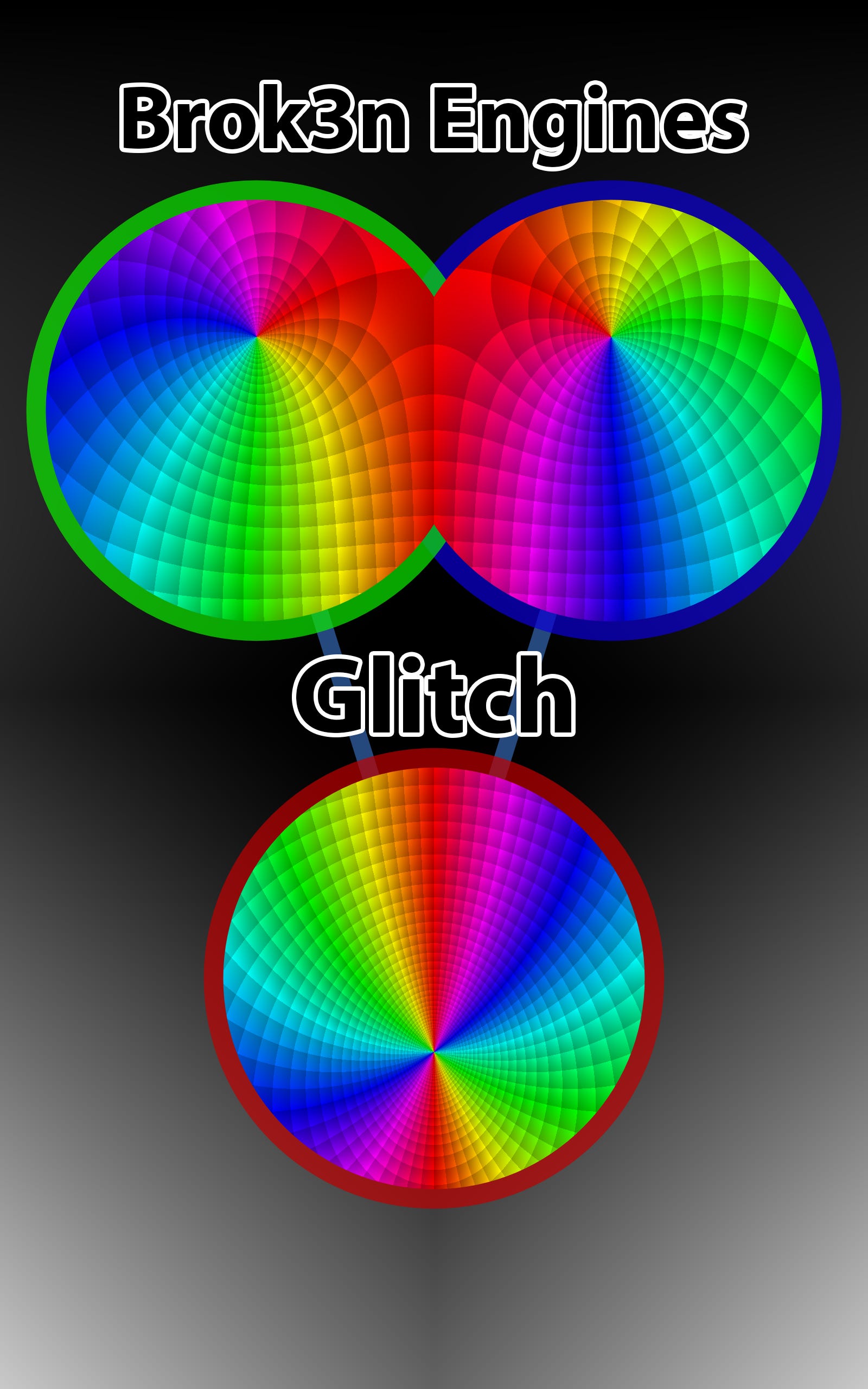
The cover is a cycle graph of the cyclic group Z3, meant here to stand for Dasha, Glitch, and Carlos. The colors are based on a phase portrait of

Where carlos, dasha, and glitch are the centers of the corresponding graph vertexes.
Makedonsko devojče
This was the music I heard one evening at Stanford University Medical Center. I followed the sound about half a mile to Tresidder Memorial Union, where the weekly Folk Dance Club dance was in progress. That part of the story really happened.
Over the next few years I came to know this dance well, It is a Lesnoto, a line dance in 7/8 time, from Macedonia.
“One gets used to anything, except for not eating.”
YOU
WORDS
“Do you want me to speak Spanish?” Dasha should have said “¿Quieres que hable español?”
Thanks. That was fun.
Why not? You speak Spanish as if it was your first language.
It is my first language!
Never that. You sound like the Dasha I am coming to know, who sometimes talks a bit randomly, but is never foolish.
It’s true, isn’t it? There really are two of you in there.
Meet my friend Dasha. She speaks perfect Spanish.
Pleased to meet you.
Likewise.
I will miss you.
And I you, Ladybug!
Great imagination. What really makes this story good is that the fantasy hints at essential truth.
When we pursue an interest and become good at it, that interest can start to direct the other parts of our life.
And it doesn't hurt that it's upbeat. We need more of that in fiction/life.
I liked how Glitch slowly became part of Dasha's everyday life instead of just staying this strange thing happening to her. The friendship between the two of them was a nice touch.